The Greatest Hits
Mary Cundiff, Ph.D.
February 2026
(4 minutes)
I remember watching the Discovery documentary, First in Human, narrated by Sheldon Cooper, aka Jim Parsons, about NIH’s Building 10, the largest research-only hospital in the world. The film follows several patients enrolled in last-resort clinical trials. One story focused on Chimeric Antigen Receptor (CAR) T-cell therapy: a personalized immunotherapy in which a patient’s own T cells are genetically modified to recognize and destroy cancer cells.
It was the first time I really grasped what it means to participate in a clinical trial when no other options remain; when “experimental” is abstract, but deeply personal. Jim delivers a chilling line about the hospital’s clinical researchers and their “motivation sitting in a hospital bed down the hall.” That sentence stuck with me. It still does. And has honestly been a contributor to my motivation as a researcher, even to this day. (Read more about T cells in my previous article.)
Gene manipulation often feels very sci-fi, and that can fuel fear. The discussion of designer babies has been around for years, but like many major scientific advances, what starts as a beautiful and elegant discovery can quickly spiral. How could the government weaponize it? What happens if it gets out of control?
If gene manipulation were as easy as the public sometimes assumes, my graduate degrees would have been far less exhausting. Don’t get me wrong, we have gotten pretty good at certain aspects of it. But the idea that we are on the brink of creating Jurassic Park is still more comical than credible. Of course, anything is possible…
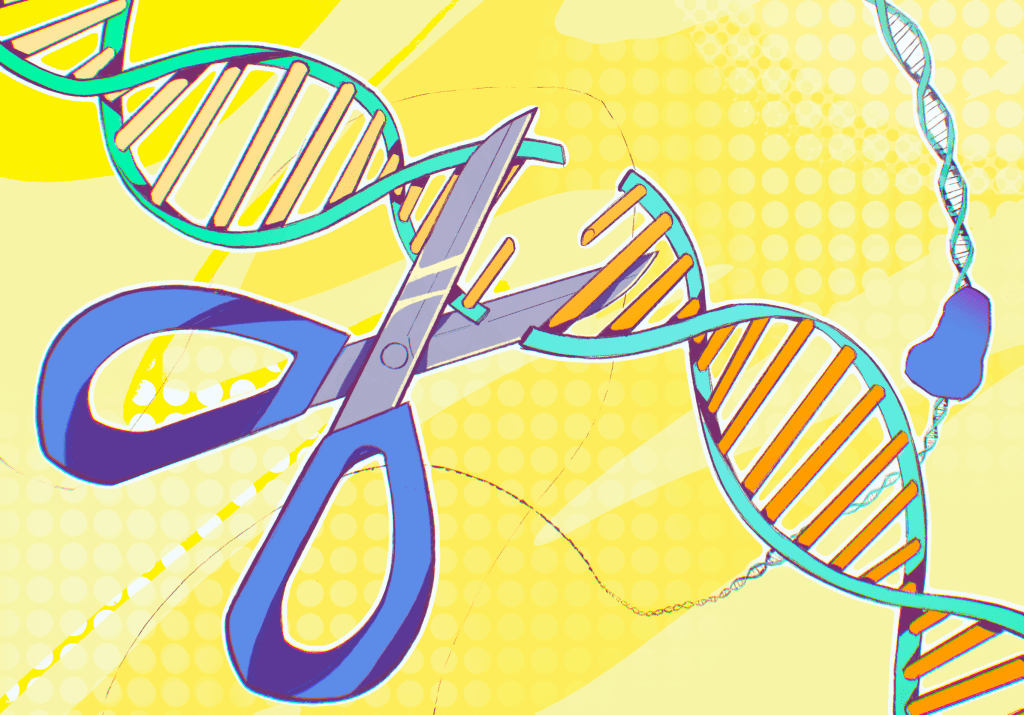
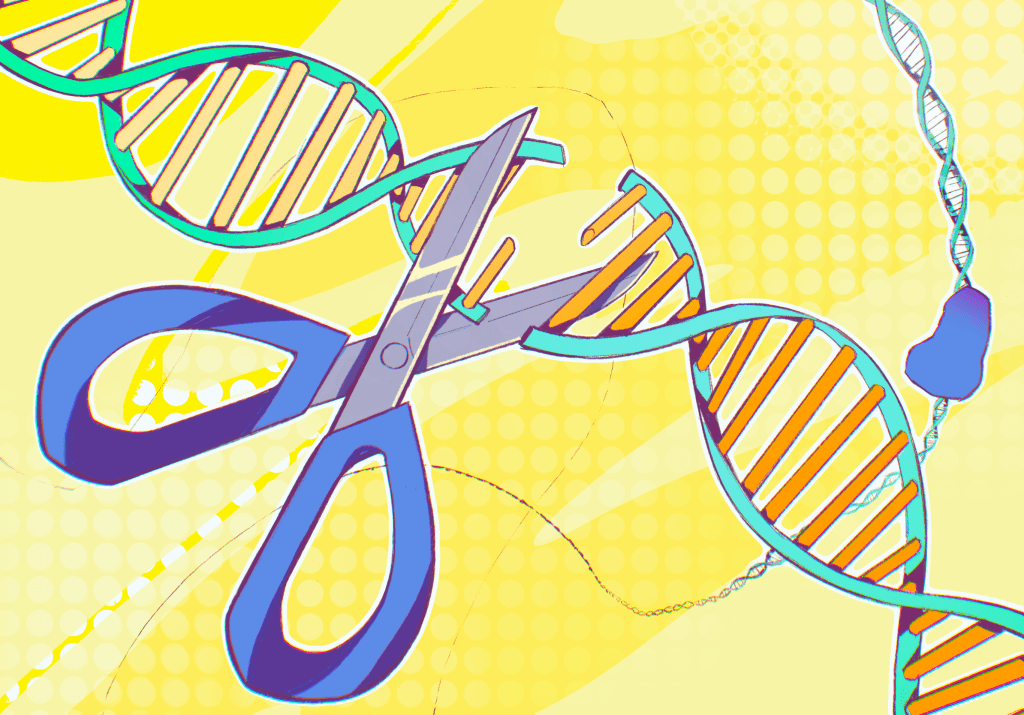
By the early 1950s, scientists had not only uncovered the chemical structure of DNA, but also realized something more profound: that there is only one kind of DNA chemistry. DNA consists of two antiparallel strands of nucleotides forming a double helix, where each nucleotide has a deoxyribose sugar and phosphate backbone with nitrogenous bases (A, T, C, G) paired by hydrogen bonds. This same molecular structure exists across bacteria, plants, animals, and DNA viruses. Once we understood and decoded the basic alphabet of our biology, we could finally start asking how the code really works. Genes became something we could isolate, move, and eventually manipulate with intention.
This realization directly enabled recombinant DNA, viral vectors, and essentially all of modern molecular biology. Through these gene manipulation technologies, scientists could directly modify any organism’s DNA!
Much like the beloved Taylor Swift, we can do an Eras tour on gene manipulation. Walking through each one in detail could fill an entire book, but the highlights tell a compelling story on their own.
| Era / Technology | Core Question | What “answered” meant |
| Recombinant DNA | Can we insert genes? | First recombinant DNA molecules and plasmid cloning |
| Viral vectors | Can we deliver genes into cells? | Retroviral/adenoviral gene transfer in mammalian cells |
| Cre–loxP | Can we control genes in space and time? | Conditional, tissue-specific recombination in mice |
| Gene Gun | Can we deliver DNA without viruses? | Physical DNA delivery into cells and tissues |
| ZFNs | Can we cut DNA at chosen sites? | Engineered nucleases induce site-specific DSBs |
| TALENs | Can programmable cutting be practical? | Easier, modular genome cutting |
| CRISPR–Cas9 | Can genome editing be simple and scalable? | RNA-guided editing in eukaryotic cells |
| CRISPR variants | Can we edit without breaking DNA? | Base editing, prime editing, CRISPRi/a |
| CAR-T therapy | Can engineered cells be drugs? | Durable remissions in leukemia patients |
| mRNA therapeutics | Can we express genes without editing DNA? | Modified mRNA avoids immune activation |
| mRNA vaccines | Can mRNA work in humans at scale? | COVID-19 vaccines |
| LSRs (serine recombinases) | Can we insert DNA precisely and safely? | Programmable, DSB-free genomic integration |
| TIGR-Tas / new RNA systems | Are there CRISPR-like systems beyond Cas? | Discovery of novel RNA-guided defenses |
We’ve come a long way since the discovery of DNA’s chemical structure. And it feels like we’ve only scratched the surface. Just as CRISPR stunned the world with its elegance and power, it already feels as though it’s being outpaced by the next wave of tools. “Answering” these questions doesn’t mean perfection. It means proof of concept. Each answer immediately reveals new questions. That’s the beauty of research.
No, we are not barreling toward Jurassic Park, but we are dramatically improving the pace, precision, and safety with which we can ask and answer biological questions using gene manipulation technologies. And that is pretty incredible.
 Grads Gone Rogue
Leave a comment