Mary Cundiff, Ph.D.
March 2026
(3 minutes)
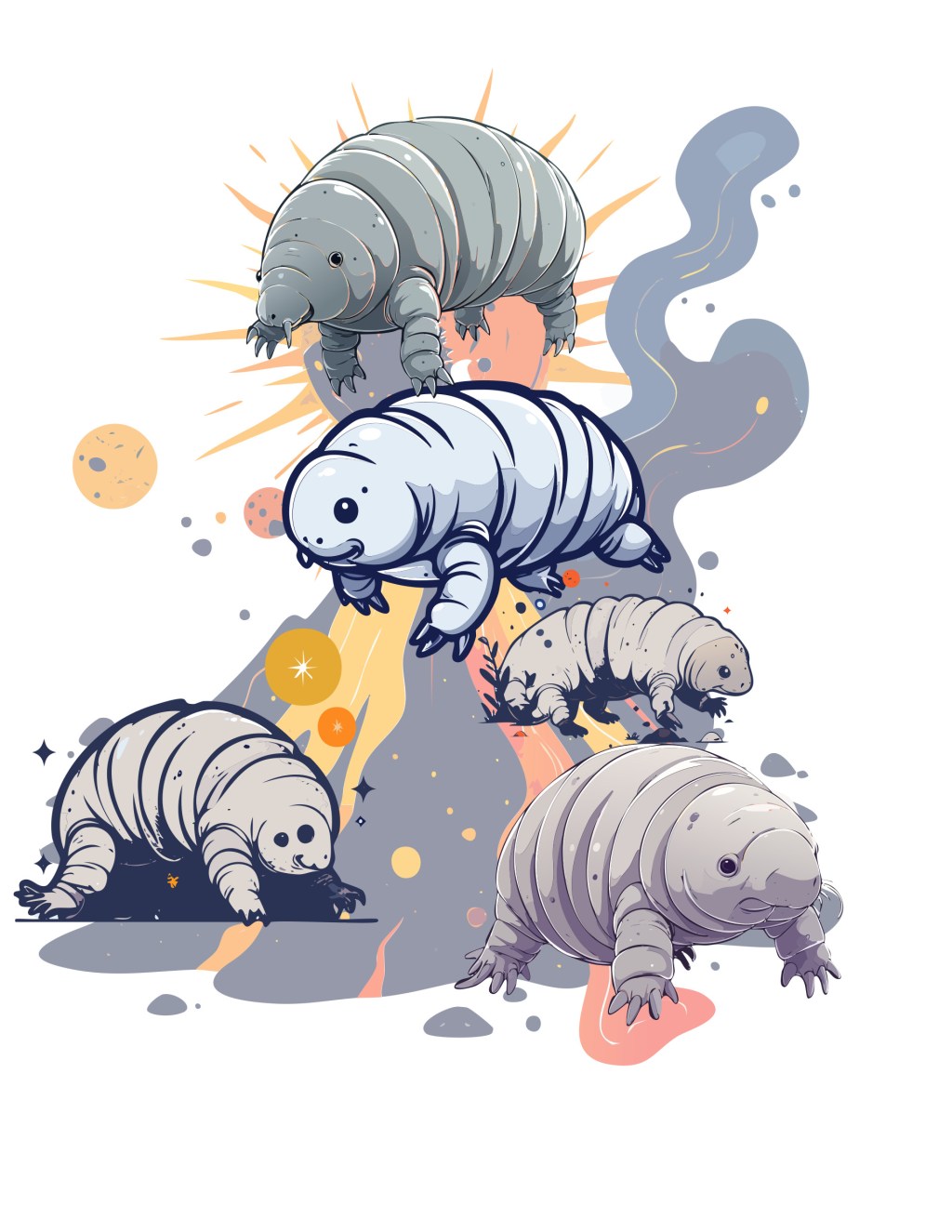
If you’ve spent any time on the biology side of social media, you may have heard about our current mascot: the tardigrade. Maybe you have, maybe you haven’t, but they’re absolutely worth learning about. Tardigrades are among the most resilient animals on Earth, with certain species capable of surviving extreme temperatures, crushing pressures, low oxygen environments, radiation, dehydration, and even prolonged starvation. Some have even survived exposure to outer space. Organisms that can endure such harsh conditions are called extremophiles.
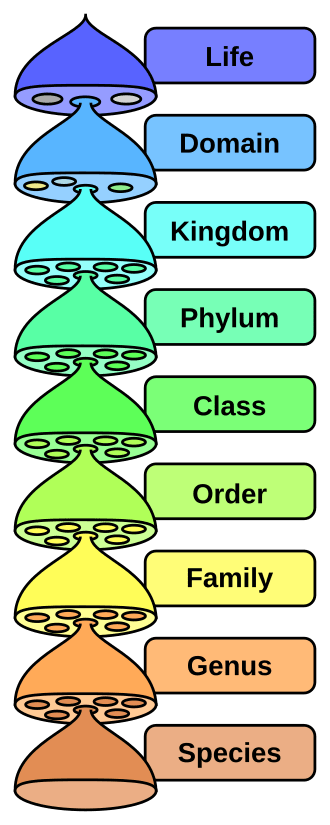
Tardigrades, more commonly known as water bears or, my personal favorite, moss piglets, belong to their own phylum within the Animalia kingdom. These eight-legged, segmented micro-animals may be tiny, but they’re remarkably diverse. As you may recall from middle school biology, the taxonomic ranks (see Figure 1) remind us that “tardigrade” refers not to a single species, but to a whole group. There are approximately 1,500 known species, with the earliest fossil evidence dating back to the Cambrian period (about 500 million years ago).
Fully grown, tardigrades reach only about 0.5 mm (0.02 inches) in length. They are most commonly found in mosses and lichens and can be easily collected and viewed under a low-power microscope. I still remember my biology teacher scooping up a cup of water from a puddle behind the school so we could observe these plump little creatures under the lens and watch them munch away.
In 1773, German zoologist Johann Goeze described them as Kleiner Wasserbär, meaning “little water bear.” A few years later, in 1776, Italian biologist Lazzaro Spallanzani coined the name Tardigrada, meaning “slow walkers”, a fitting description of their lumbering gait.
They’re surprisingly easy to find. Locate a damp, mossy area, collect a small water sample, and examine a drop under a microscope. Scientists have been studying these tiny animals for centuries, and we’ve learned a great deal about how they withstand such extreme conditions, and how that knowledge might benefit us.
For example, certain tardigrade species produce a unique damage-suppressor protein that associates closely with DNA and helps protect it from radiation-induced harm. Inspired by this discovery, scientists from MIT, Brigham, and Women’s Hospital, and the University of Iowa developed a method to help shield cancer patients from radiation damage using a tardigrade-derived protein. Delivered via mRNA, the protein helps protect DNA during radiation therapy. Considering that roughly 60% of cancer patients in the United States receive radiation treatment, and often experience severe side effects, this approach could significantly improve patient outcomes. Researchers are also exploring potential applications in chemotherapy and even long-duration space travel.Another major reason tardigrades have surged in popularity is their ability to survive in space. That said, outer space is far from gentle. In one study, many tardigrades dried out after about ten days of exposure. However, when returned to more hospitable conditions, many revived and resumed normal activity. What proved most challenging was exposure to ultraviolet radiation and combined radiation stress. While most tardigrades exposed to UV-A radiation survived and reproduced at normal rates, UV-B and combined radiation caused far greater damage.


Despite centuries of study, tardigrade biodiversity remains surprisingly underexplored. In Denmark, a massive citizen science project involving more than 30,000 schoolchildren led to the discovery of nine new tardigrade species. Beyond the scientific findings, the project demonstrated the power of community-driven research, and perhaps most importantly, more than 60% of participating students reported increased interest in science afterward.
Tiny, durable, and oddly adorable, tardigrades remind us that some of the most extraordinary biological innovations are hiding in plain sight, sometimes right in a patch of moss in your backyard.
 Grads Gone Rogue
Leave a comment