Anonymous
April 2026
(4 Minutes)
A crucial part of the process that underlies success within the scientific endeavor is the inclination to examine the object of study from a perspective of reductionism. That is, when trying to evaluate how something works, scientists break it down into the simplest, yet most informative parts, understand how those parts function, and put them back together to understand the whole. Plato aptly depicted this approach with the phrase, “carving nature at its joints.” This methodology has yielded very successful results and is the main driver behind discoveries about the world we live in. These discoveries via reductionism have fueled the basis for creating medical interventions and engineering marvels. For example, since we know cells in the body contain genes that contextualize the capabilities and outputs of the cell, then it is a reasonable approach to try and fix maladaptive genes or gene products like receptors when cells become dysfunctional. This is the reasoning behind pharmaceutical interventions: find the dysfunctional protein and turn it on or off with a molecule.
However, what makes biology an astonishingly difficult subject to broach sometimes is the sheer complexity and dynamism of a biological organism. For a biologist, there is rarely a certainty. Rather, when a biologist says generally factor X leads to effect Y, they often have to caveat the claim with, “usually under conditions A,B,C,D…etc”. The reason this is the case is because the broader context in which the biological activity is happening adds an immense amount of variability in a way that ultra controlled experiments, like in physics, don’t have to contend with. So, while reductionism has proved its utility across science, it is limited in its conceptual capabilities.
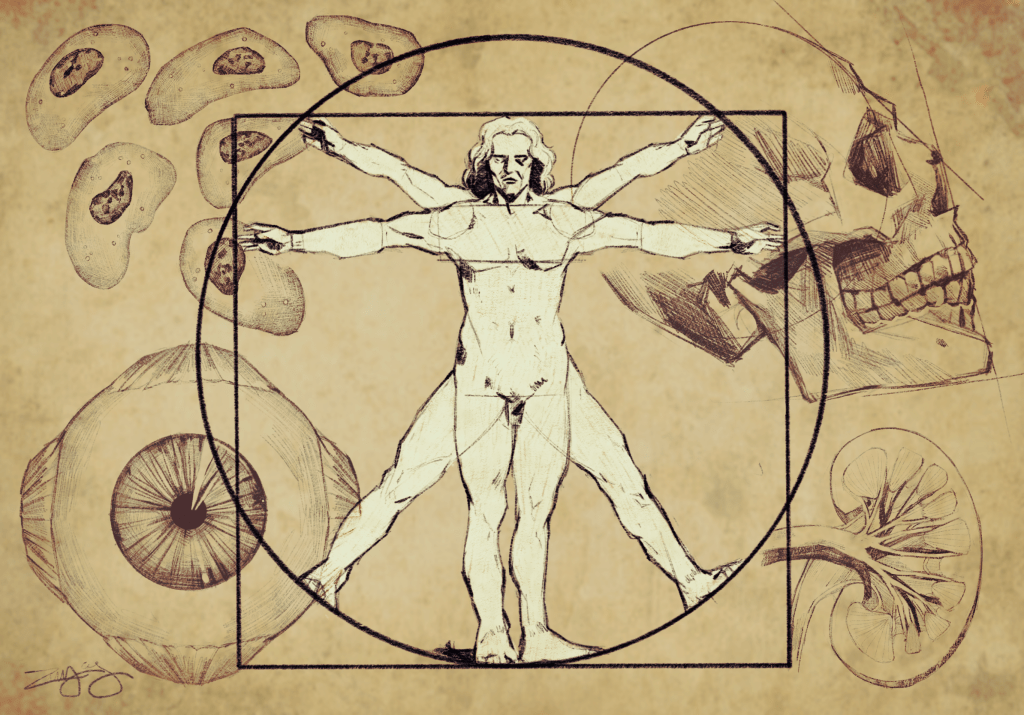
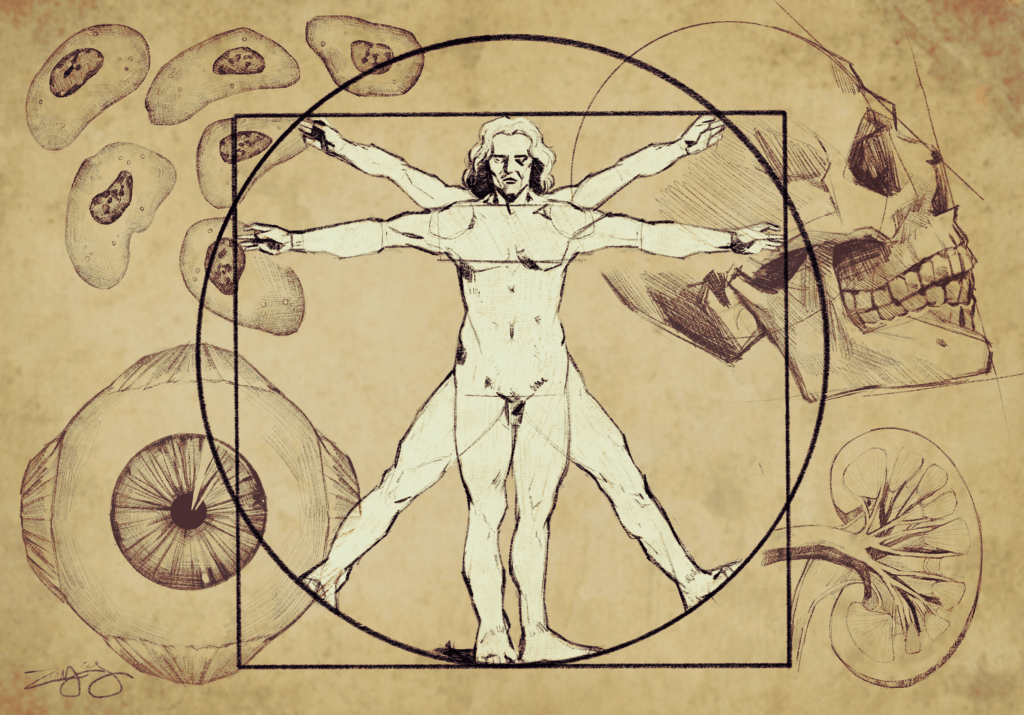
Michael Levin, a research professor at Tufts university has a different outlook on the problem. Rather than view cells that make up an intelligent organism as passive building blocks that make up the whole, he sees the entire system as a collective intelligence. Indeed, from the cells perspective, there is a holistic identity which is contained within each cell. Yet, the trillions of individuated cells that make up the human body interact in perfect harmony to build a hierarchy of interacting systems with successive strata of intelligence. Our reductionist viewpoint illustrates the human body as being composed of cells that make up tissues, leading to greater systems that interact to construct the whole organism. However, reductionism draws an artificial line in between each strata, but these are perceptual lines we draw for our own understanding. Levin raises the profound question, “How do the activities of competent, lower-level agents give rise to a multiscale holobiont that is truly more than the sum of its parts?” Rather than viewing cells, tissues, organs, or organ systems as complicated Rube Goldberg machines that simply engage in mechanistic input/output behavior, perhaps conceptualizing them in their own right as intelligent agents that try to enact behaviors that accomplish goals.
Viewing ourselves in this context can become quite mind-bending, at least for me, and leads to a dissociative line of questioning. For example, how do we draw the line between self and other within this framework? A fact that becomes pertinent is that the number of foreign bacterial cells outnumbers your own human cells. Most of these cells line your digestive tract and new research surrounding the gut-microbiome indicate they may play a role in mood and cognition. Are they part of what you would identify as being part of the self? Moreover, at what point does the Self cross the boundary into the Other? Finally, a question that plagues me is; given the realization that each one of us is a collective intelligence – and that our collective intelligence clearly has some boundary that invokes our consciousness – how do we know that we are not part of a greater collective intelligence at a supra-human level which exudes its own consciousness. On the flipside, at what level might an individual cell be conscious as it participates within the whole? Perhaps as we begin to conceptualize rigorous theories pertaining to scale and unification among biological organisms, these questions will move from the campfire to the laboratory.


Leave a Reply