Sarah Boothman, Ph.D.
May 2026
(5 Minutes)
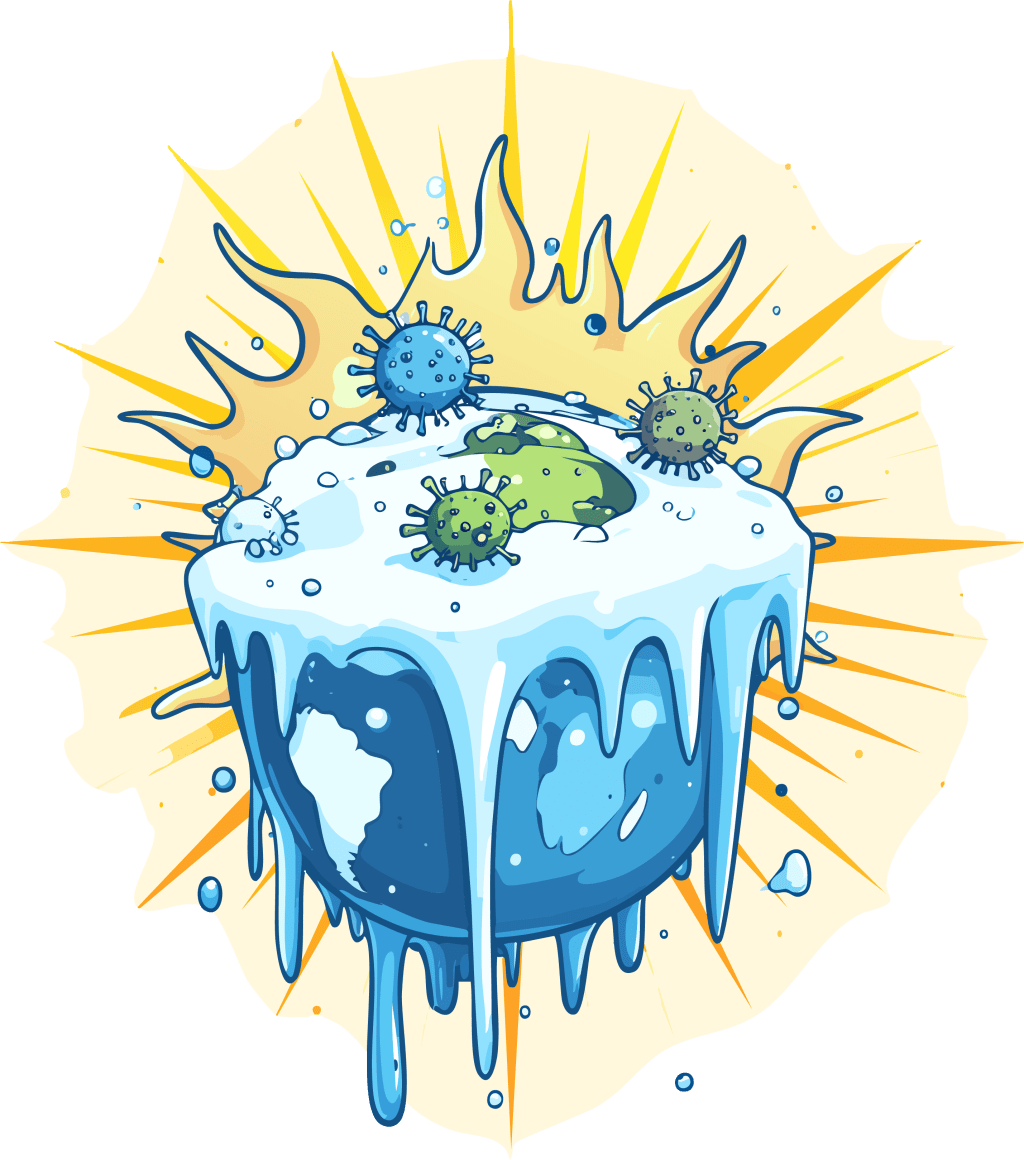
Spring has arrived! We rejoice at its warmer temperatures and increased sunlight. While we might celebrate this seasonal change, Earth as a whole is undergoing a rapid increase in average temperature beyond just changing seasons (referred to as “global warming” or “climate change”) – and that has much more harrowing consequences than a better mood. The climate change media we are most familiar with pulls on our heartstrings as we are shown footage of polar bears floating on melting patches of ice and wildlife being rescued from trees as forest fires increase globally. However, there are other organisms we should think about when it comes to climate change: microbes. The ice layers of the Northern Hemisphere are teeming with microscopic life. What happens when those layers start to melt, and how worried should we be?
About 15% of land in the Northern Hemisphere contains permafrost, ground that remains frozen (colder than 32°F/0°C) for at least 2 years. These layers of earth are primarily composed of soil, rocks, and sand held together by ice, and, much like the ground in temperate climates, they harbor a unique collection of microbes and tiny organisms frozen in time. Permafrost often serves as a natural historical record for researchers interested in climate and past ecological events. Current models predict that we are at risk of losing 30-80% of Arctic permafrost layers over the next 30 years if warming trends continue. Aside from the blow this would deliver to climate research, the melting of these layers would reawaken many microorganisms that lay dormant for centuries.
It sounds like the plot of a movie – microbes emerging from the ice after thousands of years and wreaking havoc on the earth. Will some ancient “zombie virus” thaw out and cause the next deadly pandemic? This is one focus of a group of European researchers in the Versatile Emerging infectious disease Observatory (VEO). In 2022, teams from the VEO collected soil samples in Greenland to assess the risk of pathogens emerging from thawing ground. They identified many benign microbes in these samples, but also found evidence of bacteria known to cause food poisoning and botulism. These findings may seem worrisome, but there are many caveats to keep in mind when considering them. For one, these soil samples were taken from archaeological sites full of human waste deposits, so it is not surprising that they found harmful bacteria. If one were to dig around in a sewage plant, one would find plenty of pathogens there. Also, there are many events that must occur in order for these bacteria to make it into human hosts and cause disease. They must first survive the thaw, then be picked up by suitable hosts (e.g., livestock or birds), then adapt and transfer to humans. Failure can occur at any stage of this process, and continual surveillance of wildlife and livestock within areas prone to permafrost melting will help catch any dangerous pathogen before it becomes the next pandemic.
A much more pressing concern raised by thawing microbes is their impact on the earth’s atmosphere. As part of their normal life cycle, microorganisms break down carbon and release carbon dioxide (CO2) as a by-product. CO2 is a known greenhouse gas, a gas present in Earth’s atmosphere that traps heat and contributes to global warming. When microbes thaw out of melting permafrost, they re-activate and start producing CO2. Permafrost is a superb environment for this because it is very rich in stored carbon. Recent studies estimate that permafrost regions in the Northern Hemisphere contain up to 1600 billion metric tons of carbon. This creates a daunting scenario where, upon waking from their icy slumber, microbes are treated to an all-you-can-eat carbon buffet and then release massive amounts of gas into the atmosphere. The problem then becomes cyclical, as the increase in greenhouse gases will lead to more permafrost melt and more microbe activation. Some initial research performed on microbes taken from permafrost samples in Alaska showed that resuscitation of the bacteria can take as little as one month, and they begin producing greenhouse gases quickly. With average temperatures in the Arctic increasing, longer and hotter summers are imminent, providing the ideal conditions for microbial reactivation in permafrost.
We may overlook the tiny organisms frozen in Arctic permafrost, but they pose a sizable threat to the progression of climate change and potentially to human health. While there are actionable steps we can take to mitigate the release of frozen pathogens (continued surveillance of microbes emerging in areas with high thaw risk and routine testing of wildlife and livestock in those areas), combating greenhouse gases can seem insurmountable. Yet, there are things we can do to help. The reigning consensus in the field of climate studies is that human activities (predominantly the burning of fossil fuels) are the main source of greenhouse gas emissions. Incorporating new habits into your day-to-day life, like carpooling and decreasing the amount of meat and dairy you eat, can reduce your individual carbon footprint. Arguably, the most meaningful thing to do is to use your voice and your vote. Supporting climate-conscious politicians, pushing for regulations on industries polluting the atmosphere, and advocating for solutions such as green energy and public transit will help our country as a whole reduce its climate impact. The future of our planet might look bleak, but just as those tiny microbes can cause a major change in the atmosphere, each of us can have a positive effect on our climate.
References and Further Reading
- https://science.nasa.gov/climate-change
- https://www.science.org/content/article/permafrost-can-imprison-dangerous-microbes-centuries-will-arctic-thaw-release-them
- https://arctic.noaa.gov/report-card/report-card-2019/permafrost-and-the-global-carbon-cycle
- https://www.smithsonianmag.com/smart-news/scientists-resurrected-40000-year-old-microbes-from-alaskan-permafrost-180987509/
(Generated with AI)
 Grads Gone Rogue
Leave a comment