Meredith Bennett, M.S.
May 2026
(6 Minutes)
If I asked you to imagine the largest animals on earth, what would you see? Perhaps an African Bush Elephant plodding across a savanna. A Blue Whale coasting through the open ocean. Or maybe you would think of massive animals that are now extinct, like the Saber-toothed cat, Megalodon, or Brachiosaurus. It turns out these giants can all be considered “megafauna”, a term for especially large animals. Megafauna are often charismatic and particularly treasured by humanity, making them frequent conservation priorities. Despite this appreciation for our large-bodied brethren, however, we often overlook a fascinating group of organisms: freshwater megafauna.
Before we dive into the world of freshwater megafish, let’s explore the history of megafauna on this planet. First, how large is “megafauna-large?” There is no definitive cutoff, but many sources suggest over 45 kilograms (100 pounds) (Carrizo et al., 2017). The number of species that can boast megafauna status has been decreasing steadily over the last 50,000 years. For example, out of the 57 species of terrestrial megaherbivores from the Quaternary period, only 11 remain alive today (Svenning et al., 2024). Evidence suggests that these extinctions were driven primarily by overharvesting by early humans (Svenning et al., 2024). Evidently, we were causing major destruction long before the official start of the Anthropocene (the unofficial geological epoch dominated by human activity).
The decreasing number of megafauna is disturbing, not only because we are losing unique and intrinsically valuable species, but also because large animals can have disproportionately positive effects on the environment. For example, large terrestrial herbivores can regulate plant communities and reduce competition by tramping and grazing (Malhi et al., 2016). Similarly, large carnivores often regulate entire food webs through top-down effects, and the removal of these species can induce “trophic cascades” (Malhi et al., 2016). Trophic cascades generally result in the overabundance of certain species and may lead to habitat destruction. One famous example is the destruction of kelp forests in the Pacific Northwest due to Sea Otter hunting. With fewer Sea Otters to keep them in check, Sea Urchin densities exploded. Sea Urchins, which feed on kelp, eventually caused the kelp forests to collapse. Finally, large organisms play important roles in nutrient cycling simply by eating and pooping (Malhi et al., 2016). For example, by feeding in the deep ocean and defecating near the surface, whales facilitate nutrient mixing, a process called the “whale pump.” For all these reasons and more, we should take the decline of megafauna very seriously.
You probably didn’t envision a freshwater ecosystem when I asked you to think of the largest animals on earth, but our planet’s fresh waters contain some massive and incredibly fascinating creatures. Compared to terrestrial and marine ecosystems, freshwater megafauna are understudied (He et al., 2021). In fact, despite outpacing most terrestrial ecosystems in biodiversity loss (Dudgeon et al., 2006), freshwater ecosystems have generally received less attention from the scientific community. In a global study of freshwater megafauna conducted in 2019, researchers found that populations declined by 88% between 1970 and 2012, with fish showing the greatest decline (94%) (He et al., n.d.; Maxmen, 2019). So where can we find these highly threatened creatures?
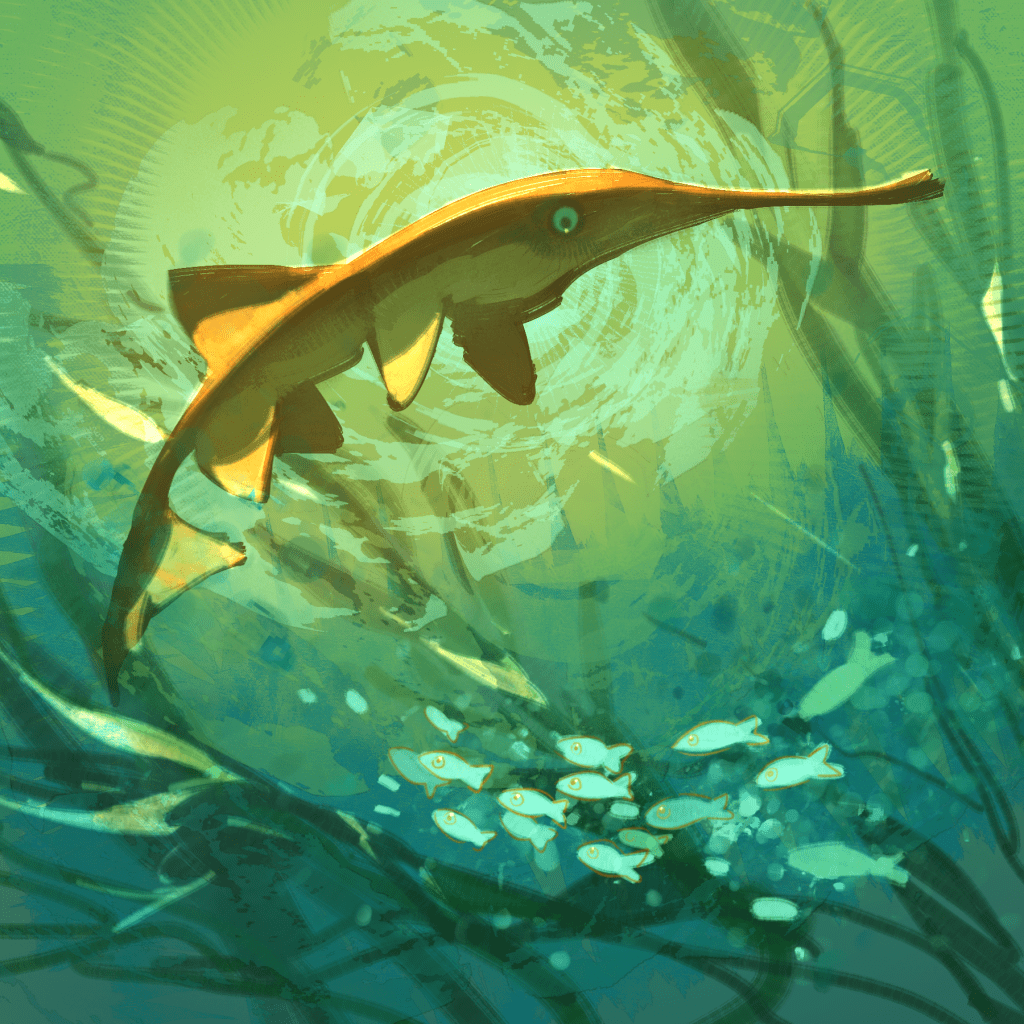
Freshwater megafauna can be found all over the world, but hotspots tend to be in South America and Southeast Asia (He et al., 2018). River basins containing the highest diversity include the Amazon, Orinoco, Congo, Mekong, and Ganges-Brahmaputra (He et al., 2018). Representative organisms in South America include the Arapaima, an-air breathing fish that can grow to be 10 feet long and the Short-tailed River Stingray, which can grow to 6 feet in diameter. Examples of megafish in Southeast Asia include Giant Freshwater Stingrays, Giant Catfish, and (until recently) the Chinese Paddlefish, which was declared extinct in 2022. Freshwater megafauna also encompass certain mammals (Irrawaddy Dolphins, Amazonian Manatees, etc.), reptiles (Crocodiles and Alligators), and amphibians (Giant Salamanders). Like terrestrial and marine megafauna, large freshwater organisms often play disproportionate roles in ecosystem processes. Some species alter hydrological dynamics in obvious ways (think of beavers!), but physical alterations can be more subtle. Crocodiles and Alligators create channels and holes, which can maintain water during dry periods, providing refuges for many species (He et al., 2024). Even fish can alter physical conditions by disrupting sediment and creating nest depressions during spawning season (He et al., 2024). Species that move between salt and fresh water, like Chinook Salmon and some sturgeon species, contribute heavily to nutrient cycling between the two ecosystems (He et al., 2024), leading us to some freshwater megafish that can be found closer to home!
Population declines in freshwater megafauna (top) and megafish, specifically (bottom). Figure from Nature news article by Maxmen, 2019

While less diverse than tropical areas, temperate zones support several freshwater behemoths. North America is home to several species of sturgeon, gar, and the American Paddlefish. Sturgeon, gar, and paddlefish are all informally considered “living fossils,” making them especially valuable members of our freshwater communities. For example, gar genomes have changed so little over the course of millions of years that individuals from two different genera (Atractosteus and Lepisosteu) were able to produce viable offspring (Brownstein et al., 2024). Unfortunately, like all freshwater megafauna, large fish in North America face many concurrent threats. The greatest negative impacts are associated with ever-increasing human development, which can lead to habitat degradation and fragmentation (He et al., 2018). Dam construction in large rivers is particularly damaging and is credited with the extinction of many species, including the Chinese Paddlefish (He et al., 2024). On top of everything else, invasive species can further diminish megafauna populations (Dudgeon et al., 2006). For example, the Colorado Pikeminnow (the largest minnow species in North America) is severely threatened by invasive Channel Catfish who consume juvenile Pikeminnows and compete with adults for food (Schmitt et al., 2022).
American Paddlefish caught while nighttime electrofishing on the Ohio River.
Photo credit: Steve Tyszko

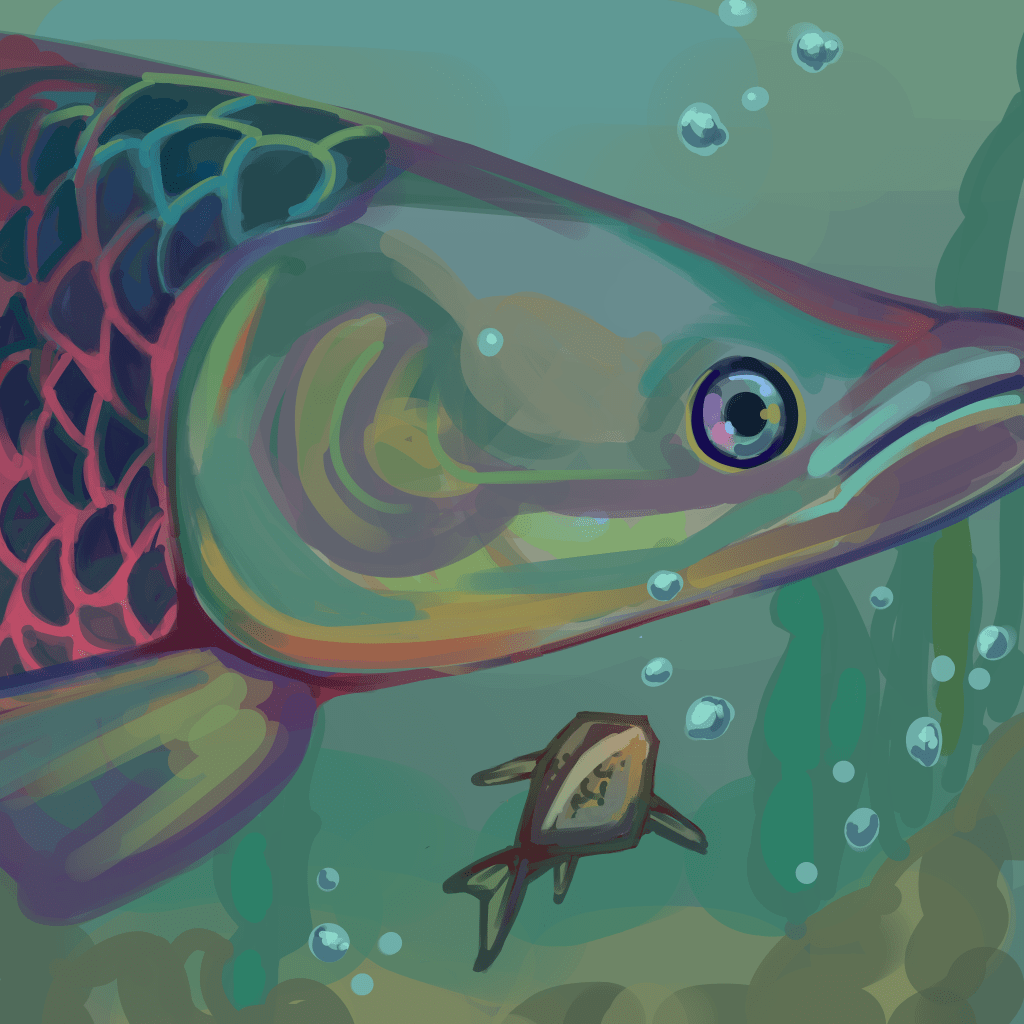
Despite the onslaught of threats facing freshwater megafauna, all hope is not lost. Conservation is possible and necessary. Some evidence even suggests that megafauna themselves facilitate conservation efforts. For example, because megafauna are found in areas of high biodiversity and disproportionately affect their environment, protecting large species will benefit entire aquatic communities and ecosystems (Carrizo et al., 2017). The first step in improving conservation outcomes will be additional research on freshwater megafauna. We still know very little about life history, population dynamics, and phylogeny for many freshwater megafauna, especially fish (He et al., 2018). Successful conservation likely depends on the active engagement of local communities who care deeply about the persistence of megafaunal species. One example can be found in Brazil, where Arapaima populations have been recovered from the brink of extinction over the past decade (Hutchison, 2023). This success is primarily attributed to the integration of academic science with the traditional knowledge of local communities (Hutchison, 2023). Recovery of the Arapaima reminds us that we can all play a part in the protection of freshwater megafauna.
References
Brownstein, C., MacGuigan, D., Daemin, K., Orr, O., Yang, L., David, S., Kreiser, B., & Near, T. (2024). The genomic signatures of evolutionary stasis. Evolution, 78(5), 821–834.
Carrizo, S. F., Jähnig, S. C., Bremerich, V., Freyhof, J., Harrison, I., He, F., Langhans, S. D., Tockner, K., Zarfl, C., & Darwall, W. (2017). Freshwater Megafauna: Flagships for Freshwater Biodiversity under Threat. BioScience, 67(10), 919–927. https://doi.org/10.1093/biosci/bix099
Dudgeon, D., Arthington, A. H., Gessner, M. O., Kawabata, Z.-I., Knowler, D. J., Lévêque, C., Naiman, R. J., Prieur-Richard, A.-H., Soto, D., Stiassny, M. L. J., & Sullivan, C. A. (2006). Freshwater biodiversity: Importance, threats, status and conservation challenges. Biological Reviews, 81(2), 163–182. https://doi.org/10.1017/S1464793105006950
He, F., Bremerich, V., Zarfl, C., Geldmann, J., Langhans, S. D., David, J. N. W., Darwall, W., Tockner, K., & Jähnig, S. C. (2018). Freshwater megafauna diversity: Patterns, status and threats. Diversity & Distributions, 24(9/10), 1395–1404. https://doi.org/10.1111/ddi.12780
He, F., Langhans, S. D., Zarfl, C., Wanke, R., Tockner, K., & Jähnig, S. C. (2021). Combined effects of life-history traits and human impact on extinction risk of freshwater megafauna. Conservation Biology, 35(2), 643–653. https://doi.org/10.1111/cobi.13590
He, F., Svenning, J.-C., Chen, X., Tockner, K., Kuemmerle, T., le Roux, E., Moleón, M., Gessner, J., & Jähnig, S. C. (2024). Freshwater megafauna shape ecosystems and facilitate restoration. Biological Reviews, 99(4), 1141–1163.
He, F., Zarfl, C., Bremerich, V., David, J. N. W., Hogan, Z., Kalinkat, G., Tockner, K., & Jähnig, S. C. (n.d.). The global decline of freshwater megafauna. https://doi.org/10.1111/gcb.14753
Hutchison, N. (2023, February 28). João Campos-Silva’s research is strengthening community-based efforts to save huge aquatic Amazon species. National Geographic. National Geographic. https://www.nationalgeographic.com/impact/article/joao-campos-silva-explorer-story
Malhi, Y., Christopher E Doughty, Mauro Galetti, Felisa A Smith, Jens-Christian Svenning, & John W Terborgh. (2016). Megafauna and ecosystem function from the Pleistocene to the Anthropocene. Proceedings of the National Academy of Sciences, 113(4), 838–846. https://doi.org/10.1073/pnas.1502540113
Maxmen, A. (2019). Giant freshwater fishes are in alarming decline. Nature. https://doi.org/10.1038/d41586-019-02403-z
Schmitt, A., Durst, S., McKinstry, M., & Hedden, S. (2022). Quantitative Assessments of Native Fish Recovery in the San Juan River Basin. U.S. Fish & Wildlife Service. https://www.fws.gov/project/quantitative-assessments-native-fish-recovery
Svenning, J.-C., Lemoine, R. T., Bergman, J., Buitenwerf, R., Roux, E. L., Lundgren, E., Mungi, N., & Pedersen, R. Ø. (2024). The late-Quaternary megafauna extinctions: Patterns, causes, ecological consequences and implications for ecosystem management in the Anthropocene. Cambridge Prisms: Extinction, 2, e5. https://doi.org/10.1017/ext.2024.4


Leave a Reply