New High-Tech Medicine Against Heart Disease
Jon Lee Andrade, Ph.D.
July 2026
(6 Minutes)
Heart attacks are bad. I don’t think anyone here is going to argue that in good faith. And since 1921, cardiovascular disease, which includes heart attack, has been the number one cause of mortality in the US, beating out all cancer and accidental death. A big reason for that has been a rise in associated risk factors like smoking and diet. It shouldn’t come as a surprise then that a lot of really smart people have taken up the challenge of understanding and combatting heart disease with great success–deaths from heart attacks have fallen almost 90% since 1970. And a new study published this May in the New England Journal of Medicine has shown very promising results in directly editing the DNA of patients, pushing our efforts into the realm of science fiction.
To understand all of that, let’s first take a look at the connection between cholesterol and heart attacks. Cholesterol is a lipid–like fats or oils–that’s made in your liver and can be taken up from your diet. It’s generally thought of as a bad thing, but cholesterol is actually an important component of your cell membranes, and it’s an ingredient your cells use to make various hormones. The issue is actually in the transport system.
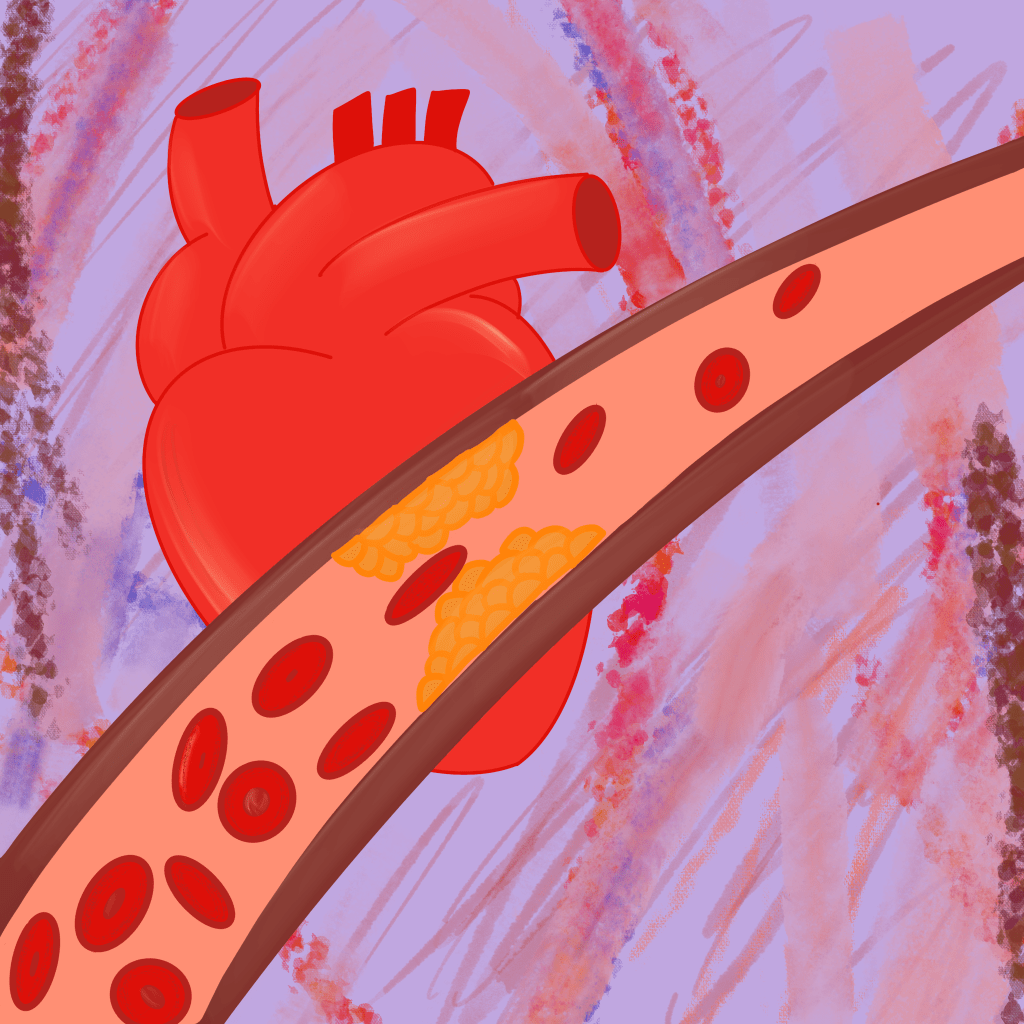
Cholesterol can be moved around in particles of lipids and proteins called LDL and HDL. Your liver packages cholesterol into LDL to send to the body, and HDL pulls excess cholesterol from your cells and blood to bring back to the liver. Diet, lifestyle, and genetics can increase circulating LDL levels, and too much leads to cholesterol accumulation in the walls of blood vessels, triggering an immune response and the formation of a plaque. The plaque grows, constricting blood flow and causing cardiovascular issues broadly, continuing until–most often–the plaque tears, blood clots rapidly, and flow stops all at once in a heart attack or stroke.
One idea to balance high LDL is with higher HDL, but this idea hasn’t had much success in lowering risk of heart disease. The most effective drugs are those that try to reduce LDL. We’ve had for some time drugs called statins which do just that. These target a protein that’s responsible for making cholesterol, which in turn lowers LDL. They’re effective for many people but can cause side effects in those who are intolerant, meaning they can’t be used in all cases, and the fact that they need to be taken every day for life is difficult for most.
Other options work with our bodies’ natural system for clearing LDL. In this system, when circulating LDL reaches a cell, a receptor on the cell surface recognizes it and pulls it inside to be used. There’s also a gene–expressed mainly in the liver–called PCSK9 that’s important for degrading these receptors. More PCSK9 means less LDL receptor, which means more LDL in the blood and more plaques. And we know this because individuals naturally carrying defective variants of PCSK9 have substantially lower circulating LDL cholesterol and lower risk of heart disease without any other notable health problems.
Current drugs targeting PCSK9 include antibodies, which bind to PCSK9 and keep it from working, and short interfering RNAs (siRNAs), which directly block the production of the gene. These have also had a lot of success, help work around statin intolerance, and are injected every few weeks to months instead of taken every day, but these can often be cost prohibitive and still need to be taken for life. And this is where the new study comes in.
Verve Therapeutics, under the pharmaceutical company Eli Lilly, developed a medicine called VERVE-102. It also targets PCSK9, but what makes VERVE-102 unique is that it’s designed to edit the actual DNA–the blueprint–of patient cells. The drug is made of an RNA with the instructions for a DNA editor and a guide RNA telling that editor where to go in the genome, all bundled up in lipid nanoparticles that can keep them safe as they travel through the body. This means that the treatment is not only direct, it’s permanent. Only one infusion of the medicine would be needed to make someone’s body produce less functional PCSK9 and, as a result, circulate less LDL particles. And this is exactly what the team saw.
35 participants with premature or a genetic risk of coronary artery disease took part in a phase I clinical trial to see how different doses of VERVE-102 performed in terms of safety and effectiveness. The results showed no dose-dependent toxicity but did show a striking dose-dependent effect, with PCSK9 levels dropping 55% and 88% at the lowest and highest doses and LDL levels dropping anywhere from 9% all the way to 62% within 2 weeks and staying there for the 18 months participants were monitored. This suggests that this method can be just as effective as other drugs with the added benefit of needing only a single doctor’s visit.
As amazing as that sounds, it really must be said that this is a very early trial, and it will be a while before we can say anything definitive about the long-term effects and safety of this drug. Gene editing can have some pretty scary effects. The rate of off-target effects, where the wrong gene is edited, is still fairly high, and even if you change exactly what you want, a single gene can interact with so many systems that we rarely know what an edit will do to a body. Targeting the right cells is also a big problem because you might only want to affect a single cell type or organ, and you definitely don’t want to accidentally edit sperm or egg cells, because then those changes will be passed on to all of the patients’ children. This is why a lot of current gene modification therapies, like CAR T-cell therapy, edit cells out of the body before reintroducing them. There have already been some problematic human modification attempts, notably a biohacker who publicly injected themselves with CRISPR in 2017 and the birth of genetically modified twins in China in 2018, so it’s incredibly important to approach this with caution while we make these techniques safer and more effective.
Even so, these results are undoubtedly exciting, and it’s not a one-off occurrence. This is the latest success story building off of years developing gene editing technology, and it’s required leaps in our understanding of how these tools work and how they affect biological systems. The identification of the CRISPR system in bacteria and its repurposing as a tool in 2012 are what allow us to target and modify specific genes. The use of lipid nanoparticles as a drug delivery system, scaled up by the COVID mRNA vaccines, was only developed in 2018 and now allows us to target specific cells in the body. And the work here is adding to that legacy, being discussed as a monumental moment in medicine in its own right, a stepping stone to humanity’s autonomy over its biological destiny. Whether that’s good or bad depends on how we make the approach. Either way, it will be much weirder than we imagine.


Leave a Reply