How a hallmark experiment in the 1940s showed that the randomness of mutation has a precise mathematical form
Nishant Panicker, B.S.
July 2026
(9 Minutes)
One of the oldest questions in biology is the origin of genetic variation. When an organism seems to have adapted to a challenge it faces, did the useful trait arise as a response to this challenge, or was it already present, by chance, before the challenge appeared? The first option, the trait arising as a response to the challenge, reflects the Lamarckian view of evolution, while the latter reflects the Darwinian view. This contrast is made more clear in Figure 1. In 1943, two scientists designed a clever experiment to answer this question. Without ever observing a single mutation, Salvador Luria and Max Delbrück settled the matter instead by studying the pattern of variability between otherwise identical growth conditions when cultivating bacteria along with their natural predators, viruses called phages.
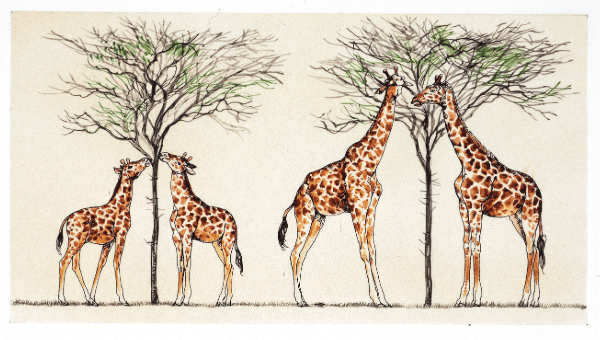
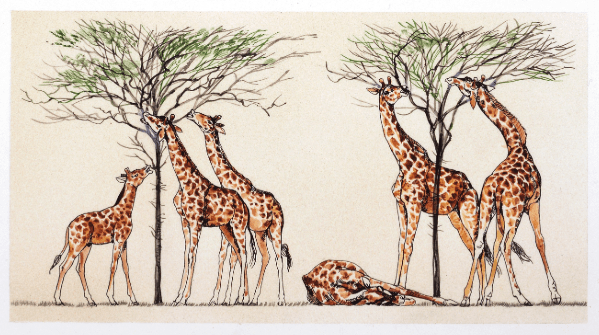
Figure 1. A schematic representing the two prominent schools of thought with regard to evolution. Left: Lamarckian view of evolution wherein variation in biological traits arises as a response to challenge, Right: Darwinian view of evolution wherein variation is intrinsically present and natural selection directs the evolution of specific traits. This figure is adapted from the Boston Hospital Review.
Before diving into the biology, it is worth learning more about Luria’s background and the unusual route that led him to his pioneering work. Born in Turin in 1912 and trained as a physician, Luria had little enthusiasm for clinical medicine and even nearly failed the science courses at the time that demanded memorizing names and classifications. He admittedly chose to attend medical school because of his parents’ wishes and his own lack of alternative inclinations. After serving his required time in the Italian army as a medical officer, he went on to study physics at the University of Rome. This is where he had his first introduction to Max Delbrück’s theories of the gene as a molecule, which he later wrote seemed to “open the way to the holy grail of biophysics”. His training gave him the physicist’s inclination to reduce complex problems to quantitative questions with definitive answers. His life was shaped by political turmoil. As a Jewish scientist, he was forced out of Mussolini’s fascist Italian regime, after which he worked briefly in Paris, before subsequently fleeing to Marseille on a bicycle as the Nazi army invaded France in 1940. Here he was granted a visa to immigrate to the United States. To learn more about Luria’s life, I would recommend reading his honest and humanizing autobiography, ‘A Slot Machine, A Broken Test Tube: An Autobiography’.
The origin of bacterial resistance to phages
Luria worked with the bacterium E. coli and a phage called T1, which can rapidly destroy a sensitive bacterial culture. When sensitive bacteria are spread on a plate already coated with phage, almost all of them are killed, but a small number of colonies survive; their descendants remain resistant even after many generations of growth in the absence of phage. Where did this resistance arise? If this resistance were induced by contact with the phage, then each cell, upon exposure to phage, would have some small, fixed probability of converting to a resistant state. If resistance arises spontaneously, then the mutations responsible would occur randomly prior to the phage being present, and the phages would merely serve to reveal which cells carry those mutations.
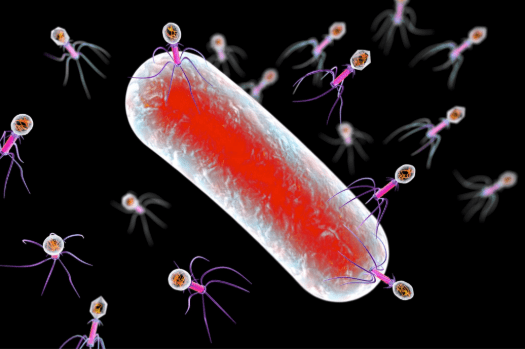
What proved to be difficult is that neither of these two explanations could be disproved by observing a single bacterial culture. The only way to identify a resistant cell was to expose the entire culture to a phage, killing every cell that hasn’t already “become” resistant. Luria’s strategy moving forward was to grow a number of independent bacterial cultures starting with few sensitive bacterial cells, allowing them to grow and then tallying the number of resistant cells by plating them against the phage.
If resistance were induced upon challenge, in this case contact with phage, each cell would face the same small probability of becoming resistant at the moment of exposure, and the counts across cultures would cluster closely around an average value. This value would follow a Poisson distribution, the distribution of the number of rare, independent events occurring in a fixed setting.
If resistance instead arose spontaneously, the timing of each mutation would matter a great deal. A mutation occurring late in a culture’s growth would leave only a few resistant descendants by the time of plating against phage, whereas a mutation occurring early would be present in all the cells descended from it, so a single early event would produce a large number of resistant cells in that one culture. Most cultures would then contain few or no resistant cells, while a small number would contain unexpectedly large quantities. In this scenario, the counts would not cluster around an average at all, but would instead fluctuate widely from one culture to the next.
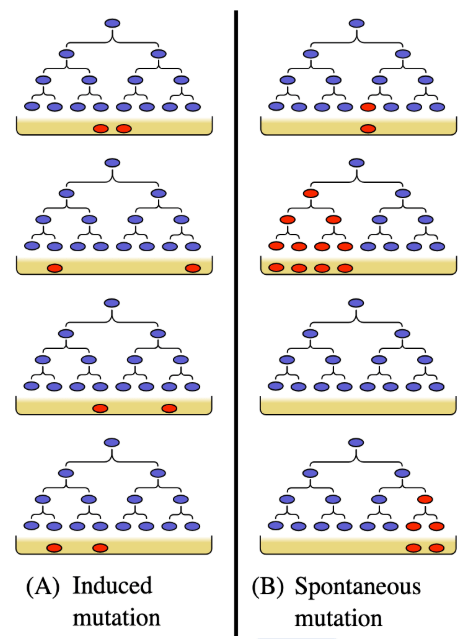
When Luria first performed the experiment, he saw wide and irregular fluctuations across cultures, and it seemed like the experiment had failed. Later, at a faculty dance in Indiana, he watched a colleague playing a slot machine. He recognized that the distribution of payouts from the slot machine resembled the distribution of mutant counts he had been recording, and that the rare large counts were the equivalent of jackpots, resistant mutants that had arisen early and been amplified through many rounds of division. This high variability in the distribution of mutant counts was the signature of spontaneous mutation. Luria communicated this observation to Delbrück, who supplied the mathematical theory, leading to their seminal 1943 paper “Mutations of Bacteria from Virus Sensitivity to Virus Resistance”.
The mathematics of mutation rates
The distribution of mutation counts that results from spontaneous mutations is now known as the Luria-Delbrück distribution. Since a single early mutation can dominate a culture, the distribution is heavily skewed, with a small number of very large values and a variance far larger than that of a Poisson distribution. Most cultures contain few or no resistant cells, because mutations occur late and leave little time for amplification. A small minority of cultures contain enormous numbers, because an early mutation has occasionally seeded a lineage that grows to dominate the population.
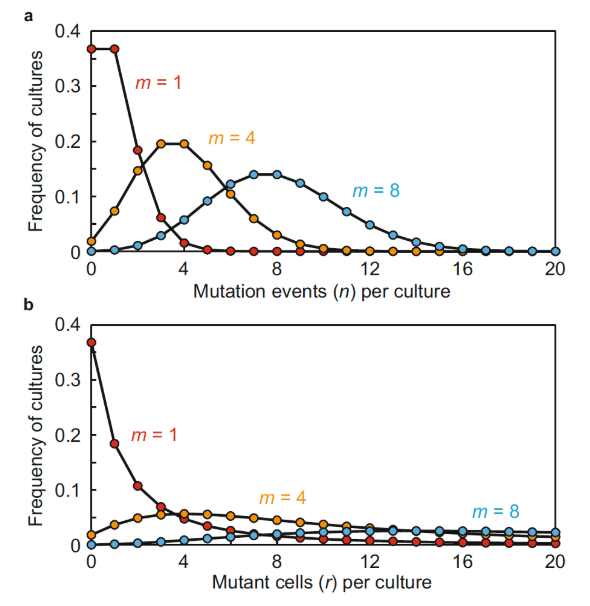
The elegance in the experiment lies in how this distribution is used to estimate the mutation rate. The obvious approach – averaging the number of mutants across all the cultures – fails, and for an interesting reason. Because of the jackpots, the average is never stable. A single early mutation can leave a culture with thousands of resistant cells, enough to inflate the average and pull it upward. Run the experiment again and a different jackpot destabilizes this previous average.
Luria and Delbrück asked a different question instead. What proportion of cultures produce no resistant mutants at all? A culture ends up with no resistant cells only when no mutation event occurred during its growth. How often this happens is tied, in a precise and predictable way, to the mutation rate; the higher the mutation rate, the more rare cultures with zero resistant mutants become (see here if you are interested in the math). Counting the proportion of cultures with zero mutants is enough to pin down the rate on its own.
The legacy of the fluctuation test experiment
The immediate conclusion was that the mutations conferring phage resistance arise spontaneously, before exposure, ruling out Lamarck’s view of evolution. The fluctuation test remains a standard method for mutation rate estimation. The emergence of antibiotic resistance within a bacterial population, and the persistence of drug-resistant cells in a tumor exposed to chemotherapy, both follow the logic that Luria and Delbrück first made quantitative: a rare variant arising early and expanding into a large clone before the selection pressure is ever applied. Another wide consequence was that bacteria could now be treated as legitimate subjects for genetics, a matter that had previously been doubted.
Its deeper contribution, though, was a way of reasoning. Luria and Delbrück showed that the randomness of mutation, unpredictable in any single cell, takes a definite and calculable shape across many of them, allowing measurement of a process that cannot be observed directly. This is why this experiment is remembered as a hallmark of the field of molecular genetics. More than 80 years later, it stands as one of the first demonstrations that the chance underlying evolution is not formless, but has precise, measurable mathematical structure.

References
A. Murray (2016). Salvador Luria and Max Delbrück on random mutation and fluctuation tests. Genetics 202(2): 367–368.
D. E. Lea and C. A. Coulson (1949). The distribution of the numbers of mutants in bacterial populations. Journal of Genetics 49(3): 264–285.
Greenspan, N. S., & Kukan, E. N. (2024). Historical Highlight: The Luria-Delbrück Fluctuation Test – A Study of the Nature of Bacterial Mutations Conferring Resistance to Infection by Bacteriophage. Pathogens & immunity, 10(1), 12–18.
Lang, G.I. (2018). Measuring Mutation Rates Using the Luria-Delbrück Fluctuation Assay. In: Muzi-Falconi, M., Brown, G. (eds) Genome Instability. Methods in Molecular Biology, vol 1672. Humana Press, New York, NY.
S. Mahadevan (2014). Of slot machines and broken test tubes: the life and times of Salvador Luria. Resonance 19(5): 395–405.
S. E. Luria and M. Delbrück (1943). Mutations of bacteria from virus sensitivity to virus resistance. Genetics 28: 491–511.
V. Shivakumar and D. Chakravortty (2014). Review of A Slot Machine, A Broken Test Tube. Resonance 19(5): 478–481.
Zheng Q (2024). What are we missing in teaching the Luria-Delbrück experiment? Journal of Microbiology & Biology Education.


Leave a Reply